
Tucson: Astronomy capital of the US— How To Enjoy Tucson’s Stunning Star-Studded Skies
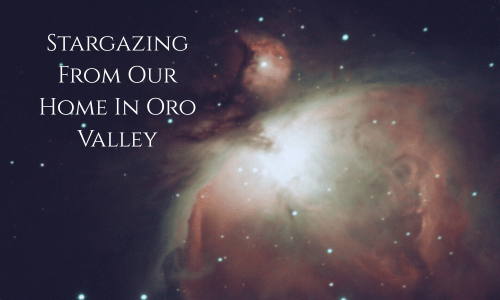
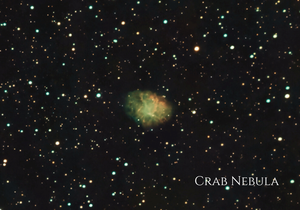
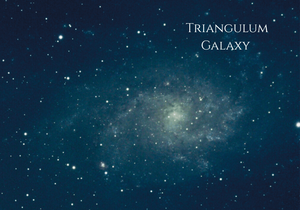
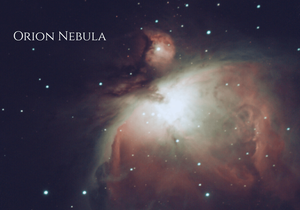
Since I was a little girl, I have been fascinated by the cosmos. Often called "Optics Valley," our beautiful area has more than stunning desert landscapes and vibrant culture— it's also a world-renowned hub for cosmic research and the unofficial capital of astronomy in the United States. The adjacent Town of Oro Valley (where we live) boasts exceptionally clear skies, low humidity, moderately high altitude, and a community deeply committed to preserving its celestial views. We have taken several photos of the moon during different phases as well as viewed other planets, galaxies and nebulas. If you are aspiring backyard astronomers like we are, this is the place to be! (All the photos on this page were taken from our backyard in Oro Valley.)

Our Dark Sky Advantage
One of the first things you'll notice about Tucson's night sky is just how incredibly dark it is. When we first moved here, I had a difficult time adjusting to driving at night—on some roads, you feel like you are being swallowed into a black abyss! This isn't an accident. Tucson, Oro Valley, Pima County and surrounding areas have implemented strict outdoor lighting ordinances, often referred to as "dark sky rules." These rules mandate the use of shielded light fixtures that direct light downwards, limit the intensity of lights, and encourage warmer color temperatures. Many HOAs also have additional rules in place.
These efforts drastically reduce light pollution, allowing fainter celestial objects to be visible and providing astronomers with ideal conditions. So, when you're driving around at night, you might notice streetlights that seem a little dimmer or more amber-toned – that's the dark sky magic at work!
Observatories and Planetariums
People come from all over the world to experience Tucson’s incredible observatories—take advantage of them if you live here and thrill your out-of-town guests!
Kitt Peak National Observatory
Located about 55 miles southwest of Tucson, world-renowned Kitt Peak is home to a vast collection of telescopes, including the iconic Mayall 4-meter Telescope and the McMath-Pierce Solar Telescope, the world's largest solar telescope. They offer public tours during the day and incredible overnight once-in-a-lifetime stargazing programs. Prepare to be mind-blown and reexamine what you think about deep space and the potential life that exists out there!
Steward Observatory and the U of A Department of Astronomy
Tucson’s reputation as a world-class astronomy hub is closely tied to the University of Arizona, home to one of the nation’s most respected astronomy programs. The university's Department of Astronomy was officially established in 1922, evolving from the earlier Department of Physics and Astronomy, which began in 1906 when A.E. Douglass—yes, the founder of modern dendrochronology—joined the faculty. (Fun fact—he also founded the Laboratory of Tree-Ring Research while there!) Today, the department offers a robust academic path for those drawn to the stars. Students can pursue a Bachelor of Science in Astronomy or continue on to a Ph.D. in Astronomy and Astrophysics. For those not seeking a full degree but still passionate about space science, undergraduate minors are also available in Astronomy, Astrobiology, and Astronomical Studies.
As the research arm of the University of Arizona's Department of Astronomy, Steward Observatory is at the forefront of astronomical research. While not generally open for public observation in the same way as Kitt Peak or Mount Lemmon, their Mirror Lab, where some of the world's largest telescope mirrors are cast and polished, offers fascinating public tours (rated in the top 10% of Tripadvisor Tucson 2025!). There are also public lectures regularly. Also affiliated with Steward, Astronomy Camp is an opportunity to learn about the cosmos with both beginner and advanced programs geared to teens and adults.
Flandrau Science Center & Planetarium
Also located on the University of Arizona campus, Flandrau have something for all ages. Built in 1972 from the donation from the estate of frequent winter visitor and author Grace Flandrau, its state-of-the-art planetarium theater offers immersive shows that transport you through the cosmos. They also have a fascinating mineral museum and exhibits on space exploration and science. It's a perfect spot for families and anyone looking for an engaging introduction to astronomy. Flandrau also has an observatory but as of this writing it is temporarily closed.
Mount Lemmon SkyCenter
Perched atop Mount Lemmon in the Santa Catalina Mountains, the SkyCenter is an offshoot of the U of A’s Department of Astronomy operating under a permit from the US Forest Service. It's easily accessible from Tucson and provides breathtaking views of both the night sky and the surrounding mountain ranges. Their popular "SkyNights" program is a must-do for anyone wanting a truly immersive stargazing experience, but they also have other awesome tours/programs.
Unidentified Aerial Phenomena (UAPs)
Cue the Ancient Aliens music! Given Tucson's clear skies and its deep connection to aerospace and defense (Davis-Monthan Air Force Base is here), it's perhaps not surprising that the area has its share of interesting sky phenomena and, yes, even UAP (Unidentified Aerial Phenomena) sightings. In fact, Arizona has had some very interesting sightings, such as the mass sightings known as the Phoenix Lights. While most often explained by conventional phenomena like aircraft, satellites, or even atmospheric conditions, many people we know have seen things they were unable to explain. We have had a few clients mention they have seen odd things and I will come across local posts on social media from time to time as well. The running joke you may hear Tucsonans repeat when asked about the phenomena is “we don’t talk about the lights!”
Ready to start your own stargazing journey? Get some equipment! We love Starizona in Oro Valley. This highly respected astronomy shop is a favorite among local and visiting astronomers. We have purchased from here in the past and it was a great experience. They offer a wide range of telescopes, accessories, cameras, and expert advice. Whether you're a beginner looking for your first telescope or an experienced astrophotographer, Starizona is THE place to go locally.
Happy stargazing!!!
Check out this article next